
Garage Door Spring Repair in Goodyear, AZ
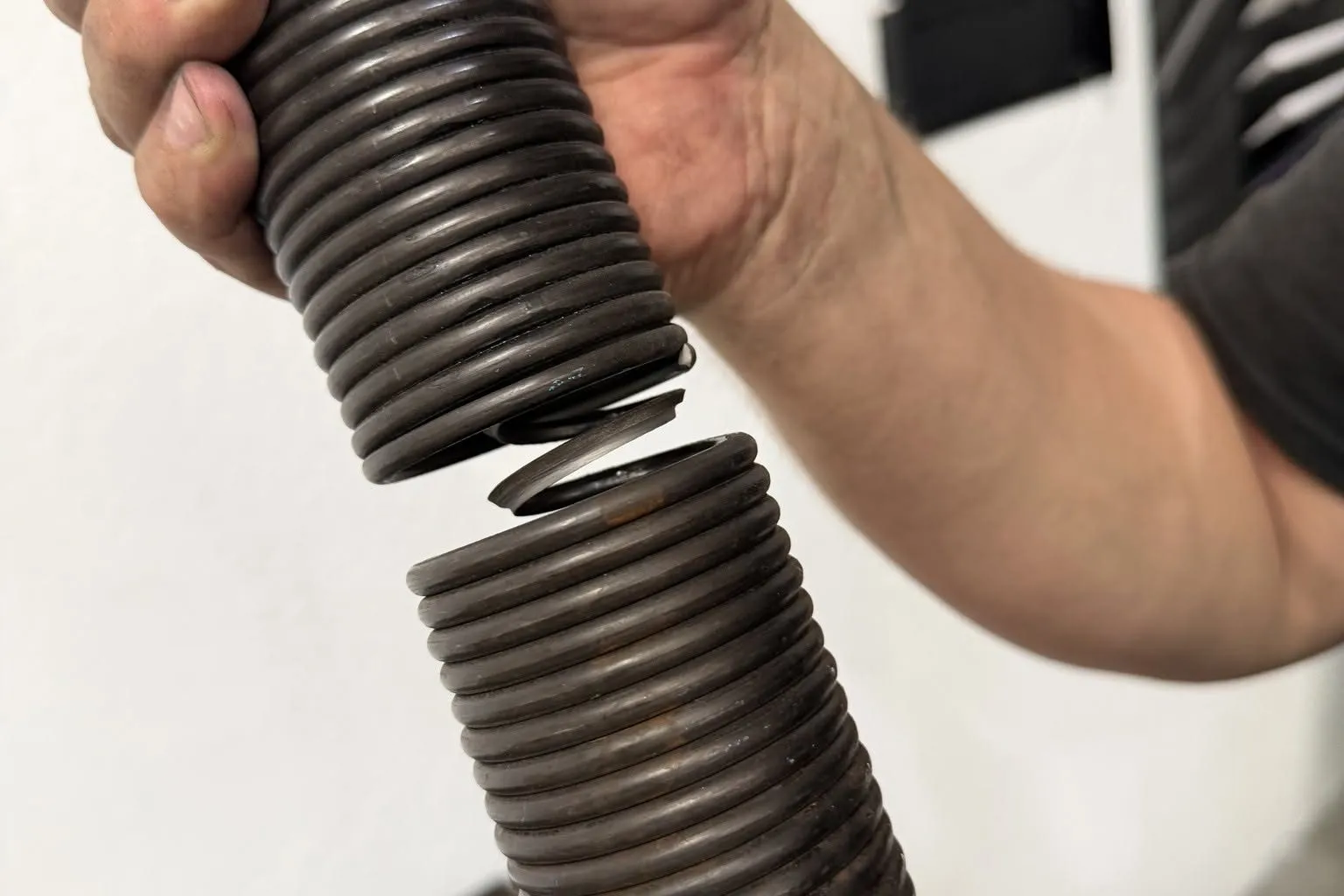
When the door suddenly feels like it weighs a ton and the opener can't lift it, a spring has almost certainly snapped. We replace torsion and extension springs in pairs, size them to your door and balance it before we leave.
The Spring Is The Muscle
In a garage door, the spring does the lifting. The opener only steers. The spring carries the door’s weight, which is why a heavy door feels light in your hand. When one lets go, you’ll know it.
Most people hear it from inside the house: a bang like a board hitting the slab. Then the door won’t open, or the opener strains and quits a foot off the ground.
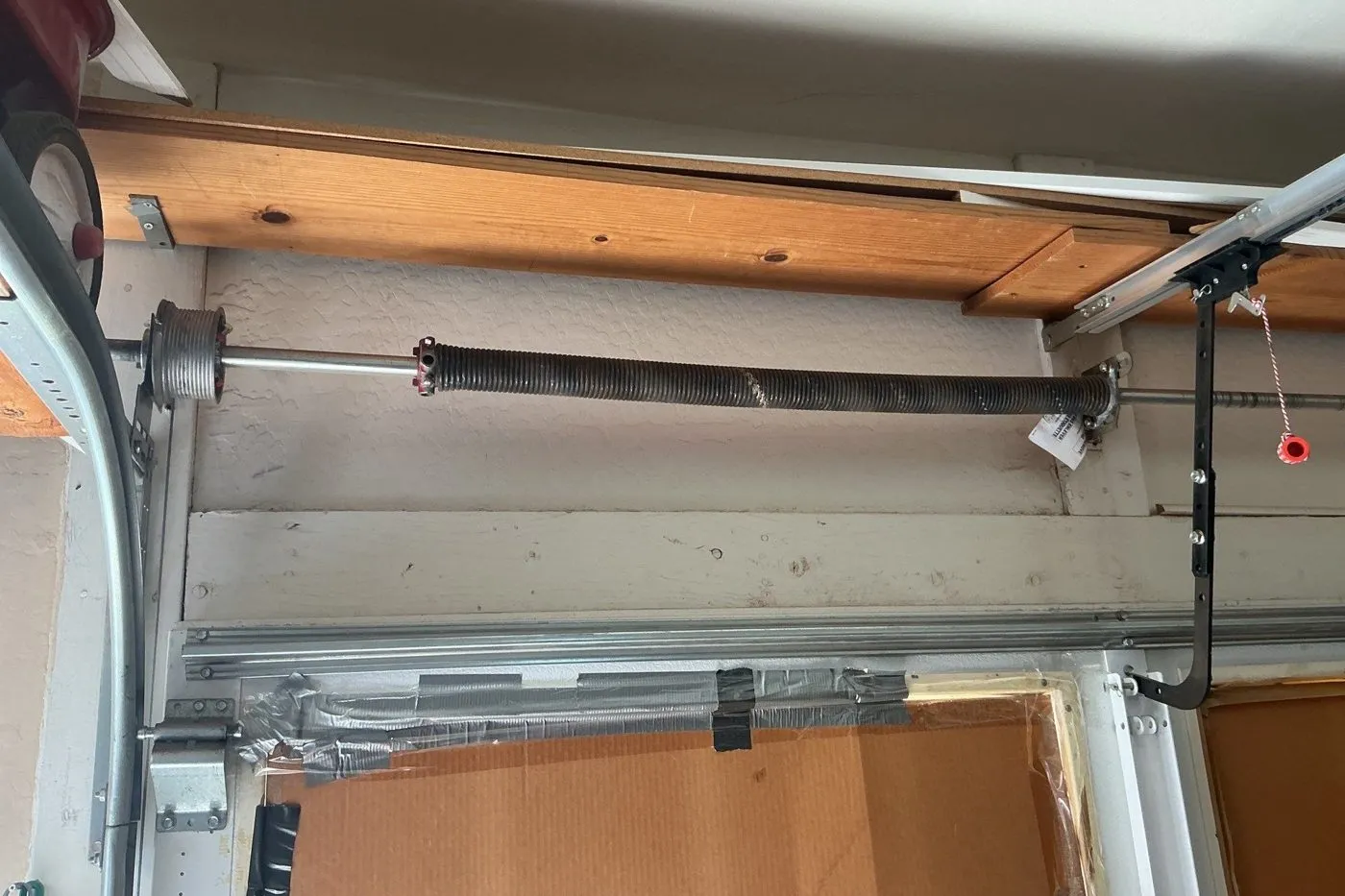
Look at the metal shaft above the closed door. If you see a gap of an inch or two in one of the coils, that spring is broken. On doors with springs along the ceiling tracks, a broken extension spring often hangs loose or lies on the floor. Rust on a coil is worth a look too, since rust eats into the wire.
Stop using the opener. Lifting the door’s weight is the spring’s job, not the opener’s. Running it on a broken spring can strip its gears and bend the top section. Leave the door where it is and call (623) 546-8868. If a car is stuck inside, that’s what our 24/7 emergency garage door repair line is for.
Questions about your house? Call (623) 546-8868.
Phoenix Heat And The Springs That Hold Your Door
DASMA’s technical sheet on springs (TDS-190) puts extreme heat in the same group as extreme cold and advises keeping doors closed where possible in those climates. It also notes that rust eats into the wire and starts the small cracks that end in a break.
The National Weather Service’s Sky Harbor records show 113 straight days at 100°F or hotter in 2024, from May 27 to Sept. 16, and a record 70 days at 110°F or hotter that same year. Sky Harbor is the official Phoenix station, so Goodyear’s own numbers aren’t in that count, but it’s the same desert summer.
What that means for you in practice:
- Keep the door closed on hot afternoons when you’re not using it
- Have the springs looked at during a tune-up, before the coils get a chance to crack
Garage Door Services in Goodyear
Springs, openers, sensors, cables and new doors. One phone number for all of it, answered 24/7 for emergencies.
Request an EstimateSpring Repair in Goodyear Neighborhoods
We cover all of Goodyear. Each neighborhood page covers how the garages there were built and what tends to wear out first.
How Long Garage Door Springs Last
Springs are rated in cycles. One open plus one close is one cycle. The standard spring on most new homes is rated around 10,000 cycles, and the range runs from 10,000 to 20,000 depending on the wire.
Four cycles a day, which is two trips out and back, adds up to about 1,460 a year. A 10,000-cycle spring lasts roughly seven years at that pace, and less if the garage is the family’s main way in and out.
As a rough guide, most pros expect torsion springs to last 8 to 15 years and extension springs 7 to 12. If you’re replacing springs on a busy door, ask about high-cycle springs. They’re heavier wire and cost more, but they push the next break further out. Our trucks carry high-cycle springs, so you can choose them on the spot.
Torsion or Extension: Which Kind You Have
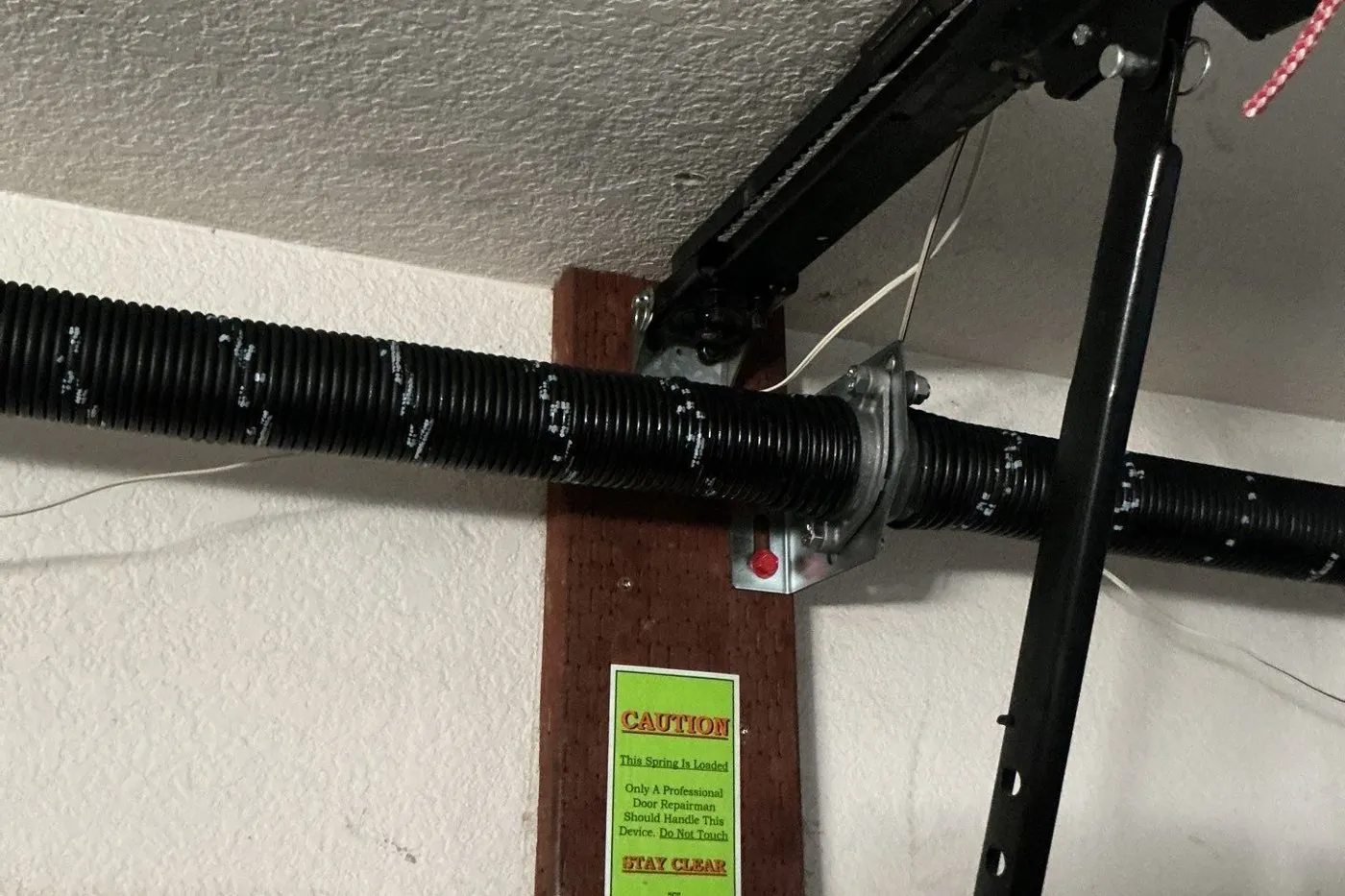
Torsion springs sit on a steel shaft above the door. They’re wound tightest with the door closed, and as the door rises they unwind and turn the cable drums at each end. Most doors in newer homes use them. Some Wayne Dalton doors put the spring inside the shaft tube, a system called TorqueMaster, which needs its own parts.
Extension springs run along the ceiling tracks on each side. They stretch as the door closes and pull it up as it opens. Every extension spring should have a safety cable running through its center. Without one, a broken spring can whip across the garage. If yours don’t have safety cables, they should be added.
We replace extension springs with extension springs and torsion with torsion, unless you ask us to convert. Either way, the new springs are sized by wire gauge, inside diameter and length to match your door’s weight and height. That’s why we size to the door, not to whatever spring was on it before.
Why We Replace Both And Balance The Door
Replacing just one spring on a two-spring door leaves a new spring working beside a worn one. They pull unevenly, and the old one is usually the next call. That’s why replacing both is the standard.
A proper spring job ends with a balance check. With the opener disconnected, the door gets lifted halfway by hand and let go. A balanced door stays put. If it drifts down or creeps up, the spring tension is off and the opener is doing work it wasn’t made for.
Springs and cables work as a team. If a cable frayed or slipped while the spring was failing, we’ll catch it and handle the lift cable repair on the same visit. If the opener ran against the broken spring for a while, we’ll check that too. The rest of what we handle is on our Goodyear garage door service home page.
One safety reminder, and it’s the one we’d give a handy homeowner too. Winding a torsion spring takes proper steel winding bars and a clear idea of how many turns the door needs. Screwdrivers slip, and a slipped bar on a loaded spring is how people get hurt. Look, listen, and leave the winding to us.
Questions We Hear a Lot
Why Replace Both Springs if Only One Broke?
The other one has run exactly the same number of cycles, so it's close to the end too. Replacing both keeps the pair matched, so the door lifts evenly instead of one side doing more of the work. Most pros treat it as standard practice on a two-spring door, and it saves you a second call for the same problem a few months later.
How Can I Tell if I Have Torsion or Extension Springs?
Look above the closed door. If there's a metal shaft running across the top with one or two large coils on it, those are torsion springs. If the springs run along the ceiling tracks on each side, parallel to the door when it's open, those are extension springs. Some Wayne Dalton doors hide the springs inside the shaft tube itself, which is a TorqueMaster system.
What Are High-Cycle Springs?
They're springs built with heavier wire so they last more open-and-close cycles. A standard spring is rated around 10,000 cycles. High-cycle springs are commonly rated at 20,000 or more. They cost more up front and suit busy households that use the garage as the front door. We'll tell you whether the upgrade makes sense for how often your door actually runs.
Does Arizona Heat Wear Out Garage Door Springs?
DASMA, the garage door industry's trade group, says doors in extreme heat or cold climates should be kept closed where possible, and that rust on a spring cuts into the wire and starts fatigue cracks. Phoenix-area summers qualify. Keeping the door shut on hot afternoons and having the springs checked during a tune-up are the simple things a homeowner can do.