
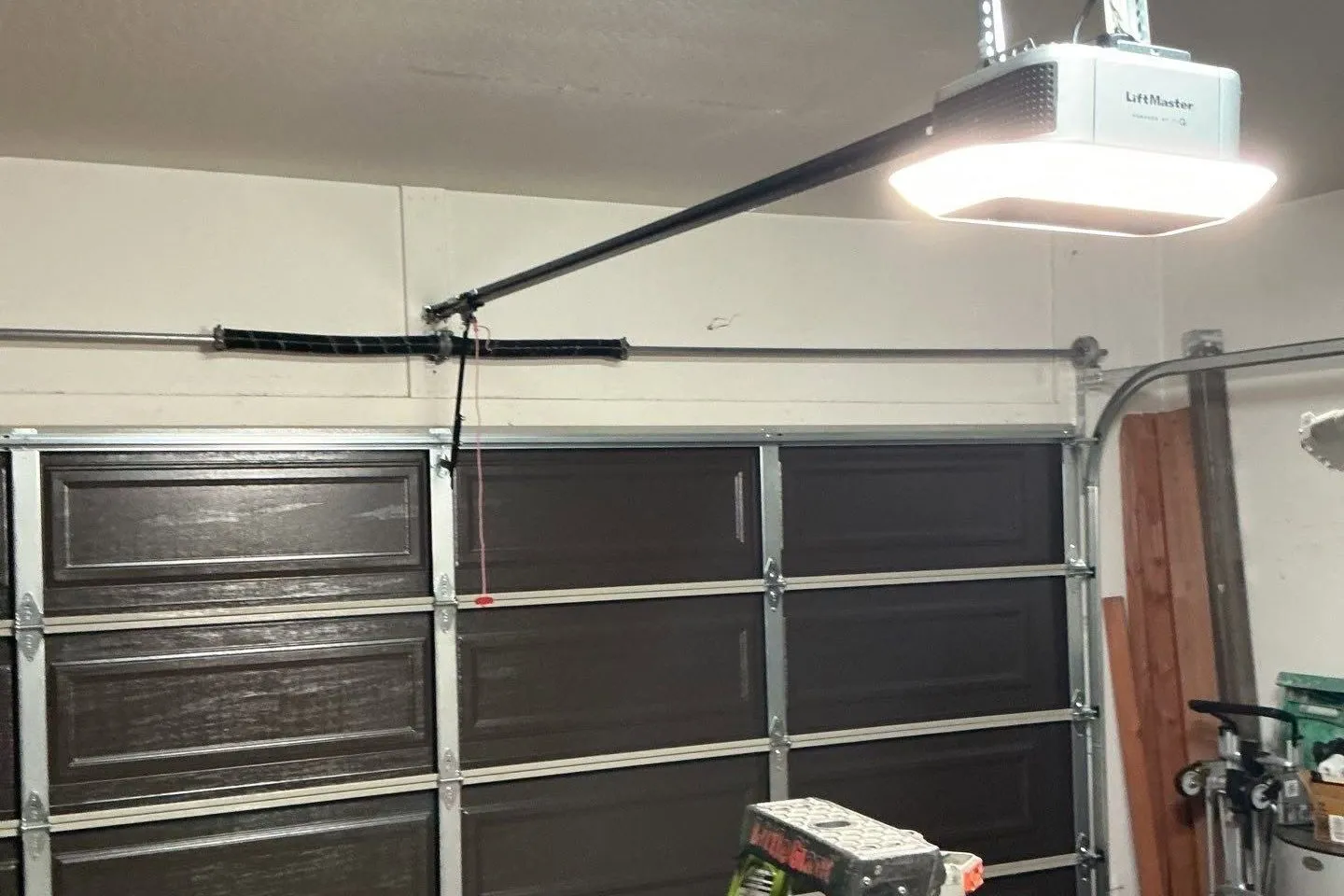
Garage Door Repair in Goodyear, AZ
A loud, shaky or rubbing door is usually a roller, a hinge, a panel or a loose bolt. We find which one, fix it, and tell you straight when the door's too far gone to be worth it. Call (623) 546-8868 or request an estimate.
Your Door Has Been Telling You Something
A garage door usually complains for weeks before it quits. There’s a grind where there used to be a hum. There’s a pop as the second section rolls over the curve in the track. There’s a shudder on the way down that wasn’t there last spring. Each of those sounds points at one worn part. Catch it early and it’s a roller or a hinge. Wait, and it can turn into a bent section.
With the door closed, run it once up and once down and listen for where the noise lives. Don’t touch the springs, cables or bottom brackets. Just watch and listen.
Some problems look like door trouble but live somewhere else. A loud bang followed by a door that won’t lift is almost always a spring, so see garage door spring repair. An opener that hums but doesn’t move belongs to opener repair. A door that starts down and comes right back up is usually the safety eyes, covered under sensor repair. And a door hanging crooked with a loose cable needs cable and track repair, not a new roller.
Questions about your house? Call (623) 546-8868.
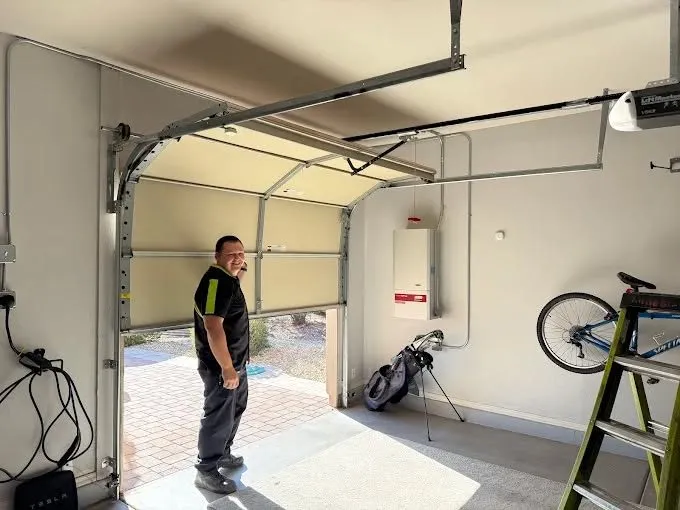
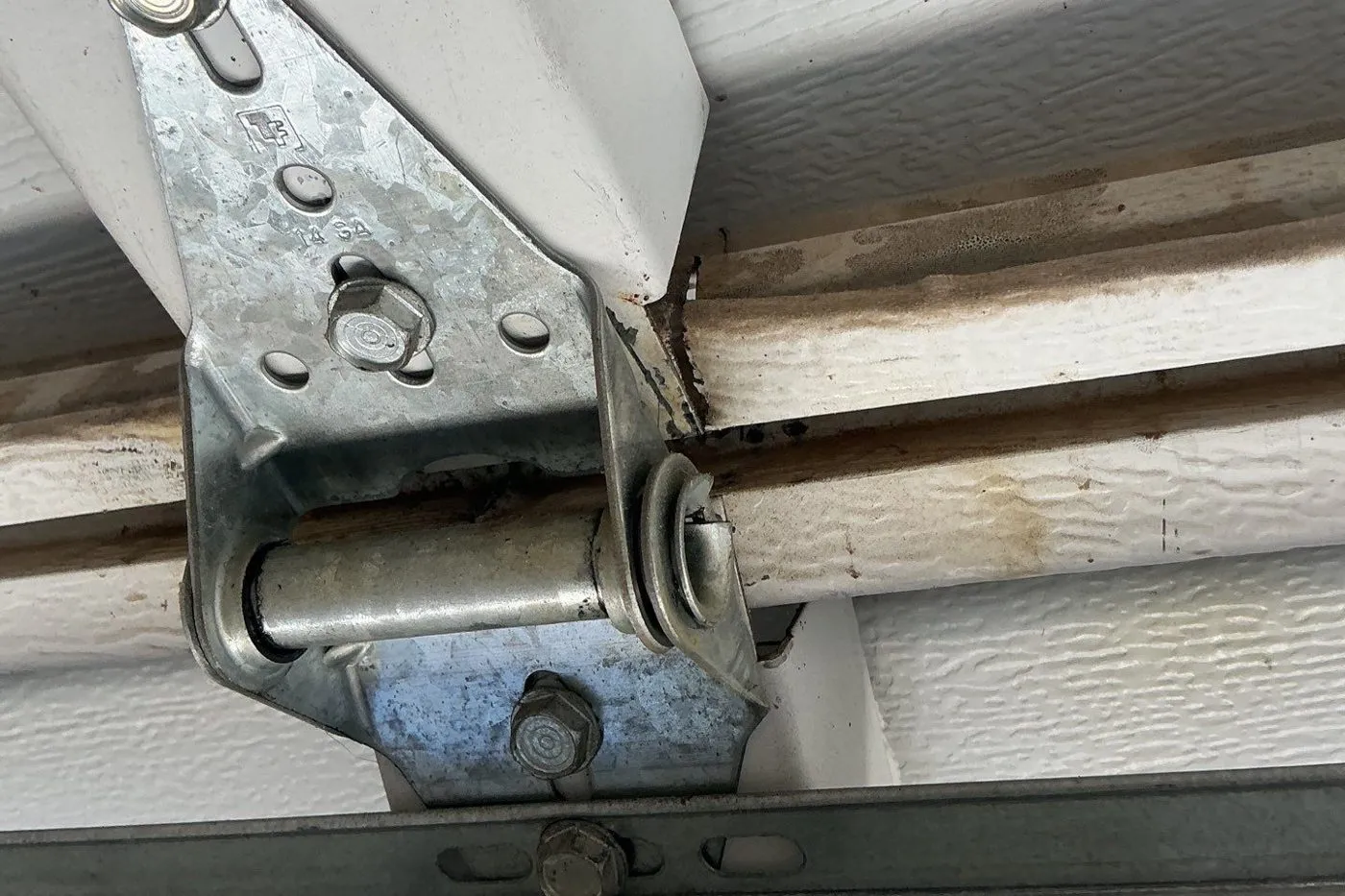
Rollers: Where Most of The Noise Comes From
Most residential doors ride on 2-inch rollers, one at each hinge and one at each top and bottom corner. Each roller is a wheel on a stem, and it rolls inside a steel track that guides the door up and over. Builder-grade doors often came with plain steel rollers. Bare steel wheels rattle in a steel track, and the open bearings dry out and grind.
The usual upgrade is a nylon roller with sealed ball bearings. It runs quieter in the track and doesn’t need oil in the bearing. Signs a roller is done:
- The wheel wobbles on its stem or has a flat spot
- Nylon is chipped or split
- The stem is bent, so the wheel rides crooked in the track
Rollers get swapped one at a time so the door never loses its support. The bottom two are different. They sit in the bracket that anchors the lift cable, which is under spring tension, so those stay with a technician.
A proper roller job doesn’t stop at the wheels. A roller that wore out on one side often did so because something else is out of line, so we check the track it rode in and the brackets holding that track to the wall.
Garage Door Services in Goodyear
Springs, openers, sensors, cables and new doors. One phone number for all of it, answered 24/7 for emergencies.
Request an EstimateGarage Door Repair in Goodyear Neighborhoods
We cover all of Goodyear. Each neighborhood page covers how the garages there were built and what tends to wear out first.
Hinges And The Steel Around Them
Every hinge on a sectional door is stamped with a number. The No. 1 hinges sit on the lowest joint, and the numbers climb toward the top. Higher numbers hold the roller a little farther from the door, which is what lets the door tip in and seal against the stop as it closes. Put a No. 1 where a No. 3 belongs and the door binds.
A common failure is a hinge that’s fine with the steel behind it torn. On thinner steel doors, the screws that hold the center hinges work loose, then tear the skin. You’ll spot hairline cracks fanning out from the screw holes, usually on the top two sections where the opener pulls hardest. We can replace the hinge and add a reinforcing plate behind it, or recommend a new section if the steel is too far gone.
A reinforcing strut across the top section helps on wide doors. The opener arm pulls on that section every trip, and without a strut a 16-foot door flexes right where the arm attaches. That’s where the cracks start.
Panels: Repair, Replace or Start Over
A dented bottom section is the classic case. If the door still runs straight, the dent is cosmetic. If the dent pushed the section out of line, the rollers bind and the door starts to rub.
Replacing one section works when the maker still sells it. Clopay, Amarr and Wayne Dalton all keep sections for current designs. We’ll need the model off the label inside the door. Two things stop a section swap: a discontinued design, and a door whose color has faded so the new piece won’t match.
If your door is past 15 years and needs several parts at once, we’ll price the repair and a new garage door side by side so you can pick.
One local note for bigger jobs: Goodyear’s 2024 building codes took effect June 23, 2026, so current city requirements get checked before a door or section is ordered.
Doors That Shake, Rub or Won’t Sit Level
Shaking. Start with the rollers and hinges above. Then look at the track brackets screwed to the wall. Loose lag screws let the track flex, and the door rattles with it.
Rubbing. A door scraping the trim on one side usually means the track has shifted out of line or a roller stem is bent. A door that rubs the header at the top is a different problem, and on a dark door facing the sun it’s often thermal bow, covered on our new door page.
Not sitting level. Close the door and look at the gap along the floor. A small, even gap is the weatherseal wearing out, and a new bottom seal in the retainer fixes it. A wedge-shaped gap, high on one side, often points to a cable that’s stretched or slipped on its drum. That’s a cable and track job, and you shouldn’t run the door until it’s checked.
Once it runs right again, a yearly tune-up keeps the noise from creeping back.
What a Repair Visit Looks Like
On a repair visit, our Goodyear garage door team checks the rollers, hinges, track, cables, springs and opener, not just the part that got you to call. You’ll hear what’s wrong and what it costs before any work starts. If a part has to be ordered, we’ll tell you what’s safe to use in the meantime.
A contractor’s tip that saves time: before you call, note when the noise happens and where. That one detail often tells us which part to bring.
Our hours are Monday to Friday 7am to 7pm and Saturday 8am to 5pm, and emergency calls are answered 24/7. Book a visit at (623) 546-8868.
Questions We Hear a Lot
Should I Switch to Nylon Rollers?
On most homes, yes. Nylon rollers with sealed ball bearings run much quieter than plain steel wheels, and they don't need the regular oiling that open bearings do. They're a common upgrade on a door that's loud but otherwise sound. The one exception is the bottom pair, which sits in the bracket that holds the lift cable under spring tension. Those should be left to a technician.
Can One Dented Garage Door Panel Be Replaced?
Often, if the maker still sells that section. We'll need the brand, model and size, which are usually on a sticker on the inside of the door. Clopay, Amarr and Wayne Dalton all sell replacement sections for current designs. The catch is an older or discontinued design, or a door that's faded in the sun, where a new section won't match the others. In that case we'll show you both options.
Why Does My Garage Door Shake When It Opens?
Shaking usually comes from worn rollers wobbling in the track, loose track brackets, or hinges that have cracked or worked loose. A door that's badly out of balance can also jerk as the opener fights it. Watch the door from inside as it opens. If one spot always shudders, that's where to look first. The opener is rarely the cause.
When Is an Old Garage Door Not Worth Repairing?
Age plus repeat trouble is the signal. Past about 15 years, a door that keeps needing parts is often a better candidate for replacement. When cracked sections and worn hardware show up on the same old door, we'll price the repair and a replacement side by side. One bad roller on a sound door is just a repair.